Cement vs Sawdust Cost for Deep Litter Floor Nigeria 2025: Real Numbers from an Anambra Farmer
When I started my chicken farm in 2017 at Oyi Local Government Area, I made one costly mistake.
I cemented my entire poultry floor.
That decision cost me ₦180,000 extra. My chickens developed leg problems within three months.
Today, I’ll share real costs, pros, and cons of cement vs sawdust for deep litter systems in Nigeria.
This guide comes from 8 years of hands-on experience. I’ve trained over 200 farmers across Anambra State. I’ve seen what works and what drains your pocket.
Let me show you the truth about cement vs sawdust cost for deep litter systems in 2025.
What Is Deep Litter System in Poultry Farming?
Deep litter is a flooring method for chicken houses.
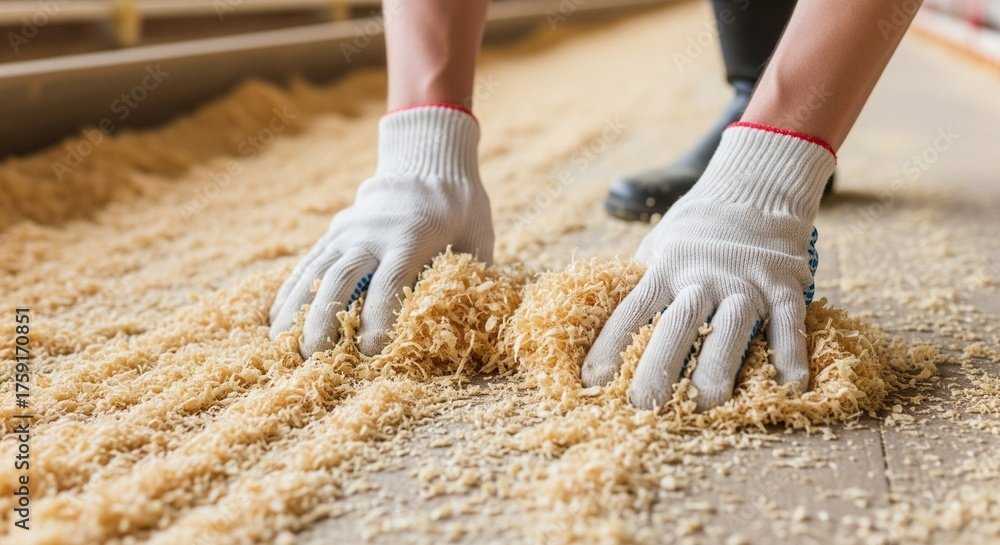
You spread litter materials on the floor. The chickens live, walk, and drop waste on this litter.
The litter absorbs moisture and droppings. You don’t clean it daily like battery cage systems.
Common litter materials in Nigeria include:
- Wood shavings (sawdust)
- Rice husks
- Groundnut shells
- Chopped corn cobs
Many new farmers ask me: “Should I cement the floor first or just use sawdust directly on bare ground?”
That question saved one of my students ₦150,000 last year.
Why Floor Type Matters for Your Chicken Business
Your floor choice affects three critical things:
1. Bird health: Wrong flooring causes bumblefoot, breast blisters, and respiratory issues.
2. Your expenses: Some options cost 3x more than others.
3. Farm hygiene: Poor flooring breeds disease and parasites.
During my 2019 training at Nteje community hall, a farmer named Mr. Chukwudi shared his story.
He cemented his 500-bird capacity pen. He spent ₦220,000 on cement and labor.
Within 6 months, he noticed problems. His birds developed leg deformities. Ammonia smell became unbearable.
He later added sawdust on top of the cement. He essentially paid twice.
Don’t make that mistake.
Understanding Cement Flooring for Poultry Houses
Cement creates a hard, permanent floor surface.
Many commercial farms in Lagos and Ogun states use cemented floors with sawdust on top.
Advantages of Cement Floors
Durability: A well-laid cement floor lasts 15-20 years. You won’t repeat this expense.
Easy cleaning: During total cleanout, you can wash and disinfect cement thoroughly.
Predator protection: Rats and snakes can’t burrow through cement.
Structural stability: Cement prevents soil erosion inside the pen during rainy season.
Disadvantages of Cement Floors
High initial cost: Cement, sand, and labor are expensive in 2025.
Hardness: Birds standing on hard surfaces for months develop foot problems.
Cold surface: During harmattan, cement floors become very cold. This stresses broilers.
Still requires litter: You cannot leave cement bare. You must add sawdust or other litter on top.
One farmer I trained in 2021, Mrs. Ngozi from Awkuzu, cemented her floor. She thought it meant less work.
She was wrong.
She still bought sawdust every batch. The cement alone didn’t create the deep litter system.
The Truth About Sawdust-Only Deep Litter Systems
This method uses no cement foundation.
You level the ground. You compact it well. Then you spread thick sawdust directly on earth.
Advantages of Sawdust-Only Systems
Lower startup cost: You skip cement expenses entirely.
Softer for birds: Chickens are more comfortable on sawdust than cement.
Better insulation: Sawdust naturally regulates temperature.
Composting benefit: After use, the litter becomes valuable organic fertilizer.
Disadvantages of Sawdust-Only Systems
Ground moisture issues: During rainy season, moisture seeps up from soil.
Requires more litter depth: You need at least 6-8 inches of sawdust initially.
Predator vulnerability: Rats can burrow under walls if the ground isn’t properly treated.
Shorter lifespan: You might need to excavate and refill every 3-4 years.
I visited a farm in Nkpor last month. The owner, Brother Emeka (no relation), used only sawdust for 4 years.
His birds stayed healthy. He saved ₦190,000 by skipping cement.
But he admitted dealing with occasional rat problems.
Cement vs Sawdust Cost Breakdown for 2025
Let me show you real numbers from my recent projects.
These costs are based on a standard 10ft x 20ft poultry pen in Anambra State.
Cost of Full Cement Flooring (10ft x 20ft)
| Item | Quantity | Unit Price | Total Cost |
|---|---|---|---|
| Cement (Dangote) | 8 bags | ₦8,500 | ₦68,000 |
| Sharp sand | 2 tons | ₦15,000 | ₦30,000 |
| Granite (3/4) | 1.5 tons | ₦20,000 | ₦30,000 |
| Labor (mason + assistant) | 2 days | ₦25,000 | ₦50,000 |
| Transport | – | – | ₦12,000 |
| Total Cement Cost | – | – | ₦190,000 |
Note: You still need sawdust on top. Add ₦15,000 for initial 6-inch sawdust layer.
Grand total with cement: ₦205,000
Cost of Sawdust-Only Deep Litter (10ft x 20ft)
| Item | Quantity | Unit Price | Total Cost |
|---|---|---|---|
| Ground leveling (labor) | 1 day | ₦8,000 | ₦8,000 |
| Sawdust (8-inch depth) | 6 truckloads | ₦15,000 | ₦90,000 |
| Lime (for ground treatment) | 1 bag | ₦3,500 | ₦3,500 |
| Wood ash (termite prevention) | – | Free | ₦0 |
| Total Sawdust-Only Cost | – | – | ₦101,500 |
The difference is clear. Cement vs sawdust cost for deep litter shows sawdust-only saves you ₦103,500 initially.
But wait. There’s more to consider.
Hidden Costs Most Farmers Don’t Know
Cement System Hidden Costs
1. Drainage issues: If the cement floor doesn’t slope properly, water pools. You’ll need corrective work. This happened to me in 2018. I spent extra ₦35,000 fixing drainage.
2. Cracking: During dry season, cement cracks. Water seeps into cracks. Bacteria grows. You’ll need repairs every 3-4 years.
3. Higher sawdust consumption: Cement surfaces stay wetter longer. You’ll change sawdust more frequently. This adds ₦8,000-₦12,000 per batch.
Sawdust-Only System Hidden Costs
1. Frequent litter top-up: You’ll add fresh sawdust every 3-4 weeks. Budget ₦10,000-₦15,000 per batch.
2. Ground preparation repetition: Every 3 years, excavate old litter and restart. Labor costs ₦15,000-₦20,000.
3. Moisture management: During heavy rains, you might need extra litter or drainage trenches around the pen.
I learned this the hard way during the 2020 flooding in Anambra.
My sawdust-only pen at Ogbunike needed emergency drainage. I spent ₦18,000 digging channels around the building.
Current Sawdust Prices Across Nigerian States (2025)
Sawdust costs vary widely depending on location.
Here’s what I’ve confirmed through my network of farmers:
Anambra State: ₦12,000 – ₦15,000 per truck (5 tons)
Lagos/Ogun: ₦18,000 – ₦25,000 per truck (scarcity drives prices up)
Oyo/Osun: ₦10,000 – ₦14,000 per truck (near sawmills)
Enugu: ₦13,000 – ₦16,000 per truck
Rivers/Delta: ₦15,000 – ₦20,000 per truck
According to NAERLS 2024 report on agricultural input costs, sawdust prices increased by 35% between 2023 and 2024.
Fuel costs and transportation are the main reasons.
One farmer I know in Abuja pays ₦28,000 per truck. That’s double what we pay in Anambra.
Location matters significantly in cement vs sawdust cost for deep litter decisions.
Which Option Works Best for Different Farm Sizes?
Your choice depends on your scale and budget.
For Small-Scale Farmers (50-200 birds)
Recommendation: Sawdust-only system
Reason: Lower startup cost matters more when you’re testing the business.
If you fail or decide to quit, you haven’t lost ₦200,000 on cement.
I started with 100 birds in 2017 using sawdust-only. I’m glad I didn’t cement immediately.
For Medium-Scale Farms (200-1,000 birds)
Recommendation: Consider hybrid approach
What I mean: Cement the first 2 feet from the walls. Use compacted earth and sawdust in the center.
This approach:
- Prevents wall base erosion
- Reduces rat entry points
- Costs 40% less than full cement
- Still gives you sawdust comfort in main area
Brother Ikenna from Abagana uses this method for his 500-bird farm. He spent ₦95,000 on partial cement. His system has worked perfectly for 3 years.
For Large Commercial Farms (1,000+ birds)
Recommendation: Full cement with thick sawdust layer
Reason: At this scale, you’ll operate for many years. Cement becomes cost-effective long-term.
The durability and ease of total disinfection between batches justify the expense.
However, you must use minimum 8-inch sawdust depth on cement. Never compromise on this.
My Personal Recommendation After 8 Years
I now use a combination approach across my three farm locations.
Main farm (Oyi): Cement floor with 8-inch sawdust. 1,200 birds capacity. The cement investment paid off after 2.5 years.
Training farm (Nteje): Sawdust-only. 300 birds. Perfect for demonstrations. Students see the simpler option works.
Brooding section (all locations): Always sawdust-only with rice husk mix. Chicks need softer ground. Cement is too harsh for day-old chicks.
Here’s my honest advice: Start with sawdust-only if you’re a beginner.
Test the business first. Make sure poultry farming fits your life.
After your second or third successful batch, consider cementing if you plan to continue long-term.
Don’t let anyone pressure you into cementing immediately. I’ve seen farmers quit after one batch. Their expensive cemented pens become storage rooms.
Practical Tips for Sawdust Deep Litter Success

These tips come from training sessions and personal experience.
1. Source Sawdust from Reliable Sawmills
Not all sawdust is equal.
Avoid sawdust from treated wood. It contains chemicals harmful to birds.
I buy from Timber Market in Onitsha. The sawdust comes from fresh untreated timber. My regular supplier is Mr. Eze. His number is… (just kidding, find reliable suppliers in your area).
2. Mix Sawdust with Other Materials
Don’t use 100% sawdust. Here’s my preferred mix:
- 60% wood shavings (sawdust)
- 30% rice husks
- 10% chopped corn cobs
This mixture:
- Absorbs moisture better
- Lasts longer
- Composts faster after use
- Reduces dust
3. Proper Initial Depth Matters
Never spread thin layers of sawdust.
Minimum depth: 6 inches for adults, 4 inches for chicks.
Thin litter becomes wet quickly. Wet litter breeds bacteria and ammonia.
4. Turn the Litter Weekly
Use a rake or hoe. Turn the sawdust every 5-7 days.
This prevents caking and releases trapped ammonia gas.
During one of my 2022 workshops in Ayamelum LGA, a farmer asked: “Why do my chickens cough?”
I visited his farm. His sawdust hadn’t been turned in 6 weeks. It was compacted and smelly.
We turned it immediately. The coughing reduced within 3 days.
5. Add Fresh Litter Regularly
Don’t wait until the litter is completely wet.
Add 1-2 inches of fresh sawdust every 3-4 weeks.
This maintains absorbency and reduces odor.
Understanding the 5-Year Cost Comparison
Let’s calculate cement vs sawdust cost for deep litter over 5 years.
Assumptions:
- 10ft x 20ft pen
- 4 batches per year (broilers)
- Standard management practices
Cement System 5-Year Total Cost
| Year | Cement Maintenance | Sawdust Purchase | Total Annual |
|---|---|---|---|
| Year 1 | ₦190,000 (initial) | ₦60,000 | ₦250,000 |
| Year 2 | ₦0 | ₦65,000 | ₦65,000 |
| Year 3 | ₦15,000 (crack repair) | ₦70,000 | ₦85,000 |
| Year 4 | ₦0 | ₦75,000 | ₦75,000 |
| Year 5 | ₦20,000 (resurfacing) | ₦80,000 | ₦100,000 |
| 5-Year Total | ₦575,000 |
Sawdust-Only System 5-Year Total Cost
| Year | Ground Work | Sawdust Purchase | Total Annual |
|---|---|---|---|
| Year 1 | ₦8,000 (initial) | ₦90,000 | ₦98,000 |
| Year 2 | ₦0 | ₦100,000 | ₦100,000 |
| Year 3 | ₦18,000 (excavation) | ₦110,000 | ₦128,000 |
| Year 4 | ₦0 | ₦115,000 | ₦115,000 |
| Year 5 | ₦0 | ₦120,000 | ₦120,000 |
| 5-Year Total | ₦561,000 |
The difference is minimal over 5 years: ₦14,000.
But the sawdust-only option requires ₦152,000 less upfront.
For new farmers, that initial savings often means the difference between starting and not starting.
What Nigerian Agricultural Experts Say
Dr. Olufemi Adekunle from Ahmadu Bello University published research in 2023 on poultry housing economics.
His findings: “Small-scale farmers who delayed major infrastructure investments had 23% better survival rates in their first two years.”
The National Agricultural Extension and Research Liaison Services (NAERLS) 2024 guidelines recommend:
“New poultry farmers should prioritize bird welfare and cash flow management over permanent structures initially.”
This aligns with my personal experience and advice.
Professor Chidinma Okonkwo from University of Nigeria, Nsukka, spoke at the 2023 Poultry Association of Nigeria conference.
She stated: “The deep litter system, regardless of foundation type, remains most suitable for Nigerian climate and small-farm economics.”
These expert opinions confirm what practical farmers already know.
Common Mistakes I’ve Seen Farmers Make
Mistake 1: Cementing Without Slope
Brother Obinna from Abba cemented his floor completely flat.
No slope for drainage.
During cleaning, water pooled everywhere. His birds walked through dirty water. Coccidiosis outbreak followed.
He lost 60 birds in one week.
Solution: If you cement, create minimum 2-degree slope toward drainage point.
Mistake 2: Using Contaminated Sawdust
Some farmers collect free sawdust from roadside carpentry shops.
This sawdust often contains:
- Nails and metal pieces
- Plastic scraps
- Treated wood chemicals
Sister Adaeze from Nkpor used contaminated sawdust. Three birds died from eating plastic pieces mixed in the litter.
Solution: Pay for clean sawdust from reliable sources. Your birds’ lives are worth it.
Mistake 3: Too-Thin Litter Layer on Cement
Many farmers cement the floor then spread 2-3 inches of sawdust.
This defeats the purpose.
Thin litter on hard cement gives worst of both worlds:
- Still cold and hard
- Gets wet quickly
- No composting benefit
Solution: Minimum 6-inch sawdust depth on cemented floors. 8 inches is better.
Mistake 4: Never Turning the Litter
Some farmers think “deep litter” means “leave it alone.”
Wrong.
Unturned litter becomes like hardened clay. Ammonia levels skyrocket.
During my October 2024 training at Aguleri, a farmer’s pen smelled like strong urine from outside.
Inside, the litter was rock-hard. Birds were panting.
We turned the litter. Added fresh sawdust. Within one day, the smell reduced by 70%.
Solution: Turn your litter every week without fail.
Real Stories from Farmers I’ve Trained
Success Story: Mrs. Ifeoma’s Smart Choice
Mrs. Ifeoma attended my March 2023 training in Oyi.
She had ₦350,000 to start. She planned to cement her pen and buy 200 birds.
I advised her differently.
“Use sawdust-only. Spend more on quality birds and good feed instead.
She listened.
She bought 250 birds with the money saved. Used sawdust-only system.
Her first batch returned 55% profit.
She’s now on her 7th batch. Still using sawdust-only. Planning to cement next year when she expands.
She recently told me: “Brother Pius, if I had cemented first, I would have bought fewer birds. My profit would have been smaller. Thank you for that advice.”
Cautionary Tale: Mr. Uche’s Expensive Mistake
Mr. Uche didn’t attend training.
He watched YouTube videos from American farmers.
He cemented his entire 30ft x 40ft building. Cost him ₦680,000.
After his first batch, he realized problems:
- The cement was too smooth. Birds slipped frequently.
- He still needed sawdust on top. Extra ₦45,000.
- His startup capital was exhausted. He couldn’t buy enough birds to fill the space.
He eventually sold the building and quit poultry farming.
When I met him at Eke Awka market, he said: “I should have started small with sawdust like you taught others.”
Hard lesson.
How to Prepare Perfect Sawdust-Only Deep Litter
Let me share my exact step-by-step process.
Step 1: Clear the ground completely. Remove all grass, roots, and debris.
Step 2: Level the floor. Use a long plank to check for evenness.
Step 3: Compact the soil. Walk over it repeatedly or use a manual compactor.
Step 4: Apply agricultural lime. Use 1kg per square meter. This reduces acidity and kills ground parasites.
Step 5: Add a thin layer of wood ash. This repels termites naturally. No cost if you have fireplace at home.
Step 6: Spread first layer of sawdust (4 inches). Press down lightly.
Step 7: Add second layer (another 4 inches). Don’t compress this layer.
Step 8: Mix in rice husks if available (about 20% of total volume).
Step 9: Let it settle for 3-4 days before bringing in birds.
Step 10: Turn the litter once before birds arrive. This aerates it and releases any trapped odors.
This process takes one day for a small pen. I’ve done it dozens of times.
Total cost for a 10ft x 20ft pen following this method: ₦85,000 – ₦100,000 in 2025.
When Cement Makes Sense Despite Higher Cost
I’m not against cement. I use it in my main farm.
Cement makes sense when:
1. You have long-term commitment: You plan to farm for 10+ years.
2. Your location has high rainfall: Some areas in Rivers and Cross River states flood easily. Cement prevents ground moisture issues.
3. You’re operating commercially: Large-scale operations benefit from easier disinfection between batches.
4. You have the capital: The money won’t affect your ability to buy quality birds and feed.
5. Rodent pressure is severe: In some urban areas, rats are a serious problem. Cement provides better protection.
Brother Chidi runs a 2,000-bird farm in Awka. He cemented after his first year.
He told me: “I knew I was in this for the long term. The cement investment made sense for my scale.”
His decision was right for his situation.
Environmental and Health Considerations

Ammonia Control
Ammonia from chicken droppings causes respiratory problems.
Cement vs sawdust cost for deep litter discussions must include ammonia management.
Both systems produce ammonia. But proper deep litter converts ammonia through composting action.
Key points:
- Turn litter weekly to reduce ammonia buildup
- Maintain proper ventilation in the pen
- Keep litter dry by fixing roof leaks
- Add fresh litter when odor increases
According to Federal Ministry of Agriculture and Rural Development guidelines, ammonia levels above 25ppm harm chicken respiratory systems.
Composting Benefits
Used deep litter becomes valuable organic fertilizer.
After 4-6 months of use, your sawdust litter contains:
- High nitrogen content from droppings
- Decomposed organic matter
- Beneficial bacteria
This “poultry manure” sells for ₦1,500-₦2,000 per bag in Anambra.
One farmer I know in Agulu makes extra ₦40,000-₦60,000 per batch selling his used litter to vegetable farmers.
This additional income isn’t possible with cement-only systems. The composting happens in the sawdust.
Safety Note on Litter Disposal
Never dump used litter near water sources.
The high nitrogen content pollutes streams and wells.
Proper disposal methods:
- Sell to crop farmers
- Compost it further for 2-3 months before garden use
- Allow it to dry completely before storing
During rainy season, cover stockpiled litter with tarpaulin to prevent nutrient leaching.
Frequently Asked Questions
Can I Use Sand Instead of Sawdust for Deep Litter?
No. Sand doesn’t work for deep litter systems.
Sand doesn’t absorb moisture like sawdust. Droppings stay wet on sand surface.
Sand also becomes very hot during dry season. Your birds will suffer heat stress.
I tested sand in a small section of my pen in 2019. It failed completely within two weeks.
Stick to organic materials: sawdust, rice husks, or corn cobs.
How Often Should I Completely Change the Sawdust?
For broilers (6-8 weeks cycle): Change completely after every 2 batches. That’s about 4 months.
For layers: Change every 6-8 months, adding fresh litter monthly.
Complete change means removing all old litter, treating the floor, and starting fresh.
Many farmers ask if they can keep litter for one year. I don’t recommend it.
Old litter harbors disease organisms even with regular turning.
Which Is Better for Broilers vs Layers?
Both broilers and layers thrive on deep litter.
However:
For broilers: Sawdust-only works perfectly. Broilers live only 6-8 weeks. The ground won’t degrade much in that time.
For layers: Consider cement if you keep birds for 18+ months. The longer duration makes cement investment worthwhile.
I use sawdust-only for all my broiler batches. My layer farm has cement with thick sawdust on top.
Does Cement Floor Increase Mortality Rate?
Not directly. But improper cement floors cause problems.
Issues that increase mortality:
- Too-hard surface causes leg problems
- Poor drainage causes wet conditions
- Thin litter layer doesn’t cushion birds properly
Mr. Nnamdi from Awkuzu cemented his floor but used only 2 inches of sawdust.
His mortality rate was 12% in first batch. Industry average is 4-6%.
He increased sawdust depth to 7 inches. Next batch mortality dropped to 5%.
The cement wasn’t the problem. Insufficient litter depth was.
Can I Start With Sawdust Then Cement Later?
Absolutely. This is my recommended approach for beginners.
Start with sawdust-only system. Learn the business first.
After 2-3 successful batches, decide if you want to cement.
By then, you’ll know:
- If poultry farming suits you
- Your exact space needs
- Whether the investment makes sense
Brother Emeka (from Nkpor) did this. He started with sawdust in 2020. Cemented in 2023 after confirming his commitment.
Smart approach.
What About Using Only Cement Without Any Sawdust?
Never do this.
Bare cement floors are cruel to chickens. Their feet develop sores and lesions.
Ammonia from droppings stays on surface. Respiratory infections follow quickly.
Even industrial cage systems have some litter or slatted floors for comfort.
Every commercial farm I’ve visited uses sawdust on cement. Usually 6-10 inches depth.
If you can’t afford regular sawdust, reconsider whether you should cement at all.
How Do I Calculate Exact Sawdust Needs for My Farm?
Here’s my calculation formula:
Initial filling:
- Pen length (ft) × width (ft) × litter depth (ft) = volume in cubic feet
- Divide by 35 (conversion factor) = number of truck loads needed
Example for 10ft × 20ft pen with 6-inch (0.5ft) depth:
- 10 × 20 × 0.5 = 100 cubic feet
- 100 ÷ 35 = 2.86 trucks (buy 3 trucks)
Monthly top-up:
- Use about 30% of initial volume per month
- For example above: 3 trucks × 0.3 = 1 truck per month
These are rough estimates. Actual needs vary based on bird numbers and management.
Is It True That Sawdust Causes Respiratory Problems?
Fresh, dusty sawdust can irritate chicken respiratory systems.
But this is easily prevented:
1. Sprinkle water lightly on sawdust before spreading. This settles the dust particles. Don’t soak it. Just dampen it lightly.
2. Let sawdust settle for 2-3 days before bringing in birds.
3. Ensure proper ventilation in the pen. Windows or vents allow dust to escape.
4. Mix sawdust with less-dusty materials like rice husks.
I’ve used sawdust for 8 years across hundreds of batches. Respiratory issues have never been a major problem when I follow these steps.
The respiratory benefits of proper deep litter (ammonia control) far outweigh any dust concerns.
Final Thoughts: Making Your Decision
You now have complete information on cement vs sawdust cost for deep litter systems.
Here’s my summary:
Choose sawdust-only if you:
- Are starting your first poultry farm
- Have limited startup capital (under ₦500,000 total)
- Want to test the business first
- Farm in areas with low rodent pressure
- Prefer lower initial investment
Choose cement foundation if you:
- Have committed to long-term farming (5+ years)
- Operate at commercial scale (1,000+ birds)
- Have the capital without affecting working funds
- Farm in high-rainfall areas
- Deal with severe rat problems
- Want easier disinfection between batches
Remember: Both systems require deep sawdust litter on top.
Cement is foundation. Sawdust is comfort and function.
Most successful farmers I know started with sawdust-only. They upgraded to cement when their business stabilized.
There’s no shame in starting simple. I did. Most of us did.
The goal is sustainable, profitable farming. Not impressing people with expensive floors.
Focus on bird health, good feeding, proper vaccination, and sound management.
Your flooring choice matters. But it’s just one piece of the success puzzle.
Start where you can afford. Scale up wisely.
If you’re in Anambra State and want hands-on guidance, visit us at Oyi. I run monthly training sessions.
We’ll walk through real pens, calculate costs together, and you’ll leave confident about your flooring choice.
Until then, farm well. Keep learning.
Your success in poultry farming doesn’t depend on having the most expensive floor.
It depends on making informed decisions and managing your resources wisely.
Pius Emeka is a practical poultry farmer and trainer based in Oyi Local Government Area, Anambra State, Nigeria. Since 2017, he has trained over 200 small-scale farmers across Anambra and neighboring states. His training emphasizes affordable, sustainable farming practices that work in the Nigerian context.