Natural Ways to Give Chickens Vitamin D in the Tropics: A Nigerian Farmer’s Complete Guide
Vitamin D keeps your chickens healthy and productive. Without it, their bones become weak and egg production drops. Many farmers in Nigeria lose money because their birds don’t get enough of this vital nutrient.
I’m Pius Emeka, and I’ve raised chickens in Oyi Local Government Area, Anambra State for eight years. I’ve trained over 200 farmers across the Southeast. Today, I’ll share proven ways to give chickens vitamin D in the tropics using natural methods that work in our Nigerian climate.
Why Vitamin D Matters for Your Chickens
Vitamin D3 helps chickens absorb calcium from their food. Without it, laying hens produce soft-shelled eggs or stop laying completely. Broilers develop leg problems and grow slowly.
I learned this lesson the hard way in 2017. My layer flock of 500 birds started laying eggs with thin shells. I was losing 30 to 40 eggs daily to breakage. A veterinarian from the National Agricultural Extension and Research Liaison Services (NAERLS) visited my farm. He tested the birds and found vitamin D deficiency.
The problem was simple. My birds stayed indoors all day. They never saw sunlight. After I made changes, egg quality improved within three weeks.
How Chickens Get Vitamin D Naturally

Chickens produce vitamin D3 when sunlight touches their skin. Unlike humans, chickens have feathers covering most of their body. They absorb UV-B rays through their combs, wattles, legs, and around their eyes.
The sun doesn’t need to be extremely hot. Even cloudy days provide some UV-B radiation. But chickens must actually be outside, not just near a window. Glass blocks the UV-B rays needed for vitamin D production.
Research from Ahmadu Bello University shows that chickens need 15 to 30 minutes of direct sunlight daily. This meets their basic vitamin D requirements when combined with proper feed.
Understanding Vitamin D Deficiency in Tropical Chickens
Many Nigerian farmers think tropical sunshine automatically prevents vitamin D deficiency. This isn’t true. I see this problem regularly during my training workshops in Awka and Onitsha.
Common signs of vitamin D deficiency include:
- Soft or thin eggshells
- Reduced egg production
- Weak or bent legs in young birds
- Poor growth rates in broilers
- Birds sitting down frequently
- Curved breastbones in severe cases
Chukwudi, a farmer I trained in 2020, raised 1,000 broilers in a fully enclosed pen. By week 4, many birds couldn’t walk properly. Their legs bent outward. He thought it was a disease. The real problem was lack of sunlight and vitamin D.
Ways to Give Chickens Vitamin D in the Tropics Through Sunlight
Create a Proper Free-Range System
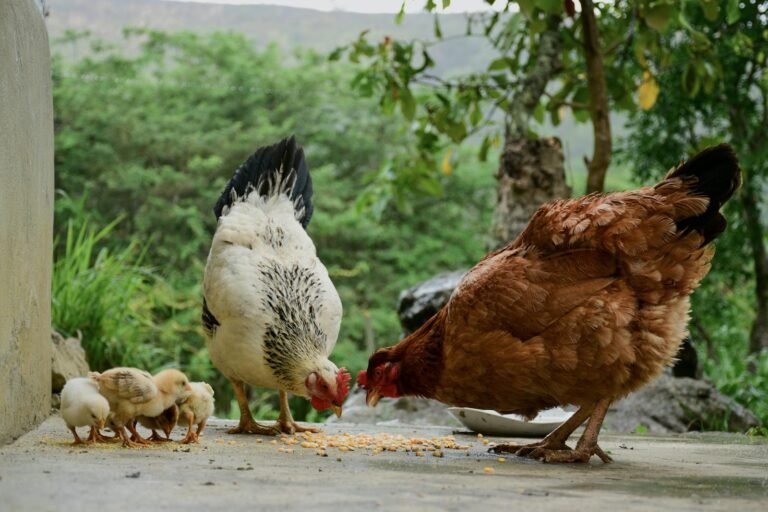
Free-range is the most natural way to give chickens vitamin D in the tropics. Your birds roam outside and get direct sunlight throughout the day.
I converted part of my farm to free-range in 2019. The birds access an outdoor area from 7 AM to 5 PM. They return to their coop at night for safety.
The outdoor space has both sunny spots and shaded areas. Birds choose where to stay based on the temperature. During hot afternoons, they rest under trees or shade nets. In the morning and evening, they walk in sunny areas.
Benefits I’ve observed:
- Stronger eggshells
- Better feather quality
- Lower feed costs (birds eat insects and grass)
- Happier, more active birds
One challenge is predators. I lost 12 birds to hawks in my first month. I now use netting over the free-range area. The netting still allows sunlight through while keeping birds safe.
Build a Semi-Intensive Run
Not everyone has space for full free-range. A semi-intensive system works well for small and medium farms. This combines a coop with an outdoor run.
The outdoor run should provide at least 1 to 2 square meters per bird. Use wire mesh for the sides and top. The floor stays open to ground level.
Mrs. Ngozi runs a 300-bird layer farm in Nteje. She built a 600-square-meter run attached to her main coop. Her birds spend mornings outside before the day gets too hot. Egg production increased by 15% after she added this run.
The run includes:
- Perches for birds to rest
- Dust bath areas with sand
- Water points
- Some natural shade from trees
Cost for her setup was about ₦180,000 for materials and labor. She recovered this investment in five months through better egg production.
Use Movable Chicken Tractors
Chicken tractors are portable pens you move daily to fresh ground. This method works perfectly for giving chickens vitamin D in the tropics while protecting them from predators.
I use tractors for my broiler batches. Each tractor holds 50 birds and measures 3 meters by 2 meters. The sides are wire mesh. The top has a small roof section for shade and protection from rain.
Every morning, I drag the tractor to a new spot. Birds get fresh grass and sunshine. Their droppings fertilize the ground naturally.
Emmanuel, a young farmer I mentored in 2022, started with 100 broilers in two tractors. He moves them across his family’s cassava farm. The chickens get sunshine and eat insects. His birds reach market weight 3 to 5 days faster than his previous batches raised entirely indoors.
Schedule Outdoor Time for Deep Litter Systems
Many Nigerian farmers use deep litter systems indoors. This keeps birds protected but blocks sunlight. You can still provide natural vitamin D by scheduling outdoor time.
Open your coop doors or windows during morning hours. Let birds walk outside for 1 to 2 hours. Even this short exposure helps with ways to give chickens vitamin D in the tropics.
My friend Ifeanyi runs a 1,000-bird layer farm in Awkuzu. His main house is deep litter. He opens large doors on two sides from 6:30 AM to 9 AM. Birds walk in and out freely during these hours. Afternoon temperatures get too high, so he closes everything and runs fans.
This simple change reduced his soft-shell egg problem by 80%. He didn’t need to rebuild his entire farm structure.
Dietary Sources of Vitamin D for Chickens
Sunlight is the best source, but diet also matters. Some feeds naturally contain vitamin D3. Others need supplementation.
Choose Quality Commercial Feed
Good commercial layer or broiler feed includes vitamin D3. Check the feed tag for guaranteed analysis. It should list vitamin D content between 1,500 and 3,000 IU per kilogram.
I buy my feed from Vital Feed in Onitsha. Their layer mash contains 2,000 IU vitamin D3 per kilogram. This level supports healthy birds when combined with some sunlight exposure.
Cheap feeds often lack proper vitamin supplementation. I tested a low-cost brand in 2018. My birds developed health problems within two months. The feed tag showed no vitamin D content listed.
Never compromise on feed quality to save money. Medical treatments and lost production cost more than buying proper feed.
Fish Meal and Fish Oil
Fish meal contains natural vitamin D3. It’s a common ingredient in quality poultry feed. Small fish like crayfish (uku) are sun-dried and ground into the feed.
Some farmers add fish oil directly to feed. Use about 10 milliliters per kilogram of feed. Mix thoroughly before serving.
Dr. Obinna from the National Animal Production Research Institute (NAPRI) suggests fish oil supplementation for birds with limited sun exposure. The vitamin D absorbs well through their digestive system.
I tried this method during harmattan season when birds stayed indoors more. It worked, but the oil made feed spoil faster in our hot climate. Use it within 24 hours of mixing.
Sun-Dried Feed Ingredients
Some farmers sun-dry their feed ingredients before mixing. This increases vitamin D content slightly. The UV radiation converts ergosterol in plants to vitamin D2.
Vitamin D2 works for chickens but not as well as D3. Don’t rely on this method alone. Use it as a supplement to direct sunlight exposure.
Managing Sunlight Exposure in Tropical Heat
Nigeria’s tropical climate brings intense heat. Too much sun exposure causes heat stress in chickens. You must balance vitamin D needs with temperature management.
Best Times for Outdoor Access
Early morning and late afternoon are ideal. Temperatures are cooler, and UV-B radiation is still present.
From my experience, these schedules work best:
Morning session: 6:30 AM to 10:00 AM Evening session: 4:00 PM to 6:00 PM
During dry season, morning sessions are more important. Afternoons get extremely hot. In rainy season, adjust based on weather conditions.
Provide Adequate Shade
Never force birds to stay in direct sun without shade options. They will overheat and stop eating.
I plant pawpaw trees and banana plants around my runs. These grow quickly and provide natural shade. Shade nets also work well. Use 50% shade cloth that blocks heat but allows UV-B rays through.
Water is critical during outdoor time. Place multiple drinkers in shaded spots. Birds need constant access to cool, clean water.
Watch for Heat Stress Signs
Learn to recognize when birds are too hot:
- Panting with open beaks
- Wings held away from body
- Reduced movement
- Gathering in shaded areas
- Refusing to eat
If you see these signs, bring birds back to their coop. Run fans or sprinkle water on the roof to cool the space.
Vitamin D Supplementation for Indoor Flocks
Some farming situations don’t allow outdoor access. You might farm in a densely populated area or face serious predator problems. In these cases, vitamin D supplementation becomes necessary.
Water-Soluble Vitamin D3
Liquid vitamin D3 can be added to drinking water. This is one of the practical ways to give chickens vitamin D in the tropics when sunlight access is limited.
Follow manufacturer instructions carefully. Too much vitamin D causes toxicity. Birds develop kidney problems and can die.
I use this method only during disease outbreaks when birds stay isolated indoors. Normal dosage is about 1,000 IU per liter of water for 5 to 7 days.
Injectable Vitamin D
Veterinarians can inject vitamin D in severe deficiency cases. This is expensive and stressful for birds. I’ve only done this twice in eight years, both times on very sick birds.
One case involved a prized Noiler hen that couldn’t walk. The vet gave a vitamin D injection along with calcium. The bird recovered within ten days.
This is not a practical solution for large flocks. Focus on prevention instead.
Premix Supplements
Feed premixes contain concentrated vitamins and minerals including vitamin D. Add these to your feed at recommended rates.
I buy Agrited Premix from local dealers. It contains 12,000 IU vitamin D3 per kilogram of premix. I add 2.5 kilograms of premix per 100 kilograms of feed.
This boosts overall vitamin content in farm-mixed feeds. It doesn’t replace sunlight but helps bridge gaps.
Creating an Effective Lighting Program
For fully enclosed poultry houses, lighting affects more than just visibility. It impacts vitamin D status indirectly through bird behavior and stress levels.
Natural Light Windows
Even indoor flocks benefit from natural light exposure through windows. Design your poultry house with windows on opposite walls for cross-ventilation and light entry.
Windows should cover 15% to 20% of floor space. Use clear materials, not tinted or colored plastic. Position windows to face east and west for morning and afternoon sun.
My current layer house has 12 large windows. Birds near windows show better health than those in darker sections of the house. I rotate birds weekly to give everyone time near windows.
Artificial UV-B Lamps
Special UV-B bulbs exist for reptile keeping. Some advanced farmers use these for indoor chicken flocks. The bulbs produce UV-B radiation similar to sunlight.
This technology is expensive for Nigerian farmers. One bulb costs ₦8,000 to ₦15,000 and covers only a small area. You need multiple bulbs for large flocks, plus electricity to run them.
I tested this in 2023 with 50 birds as an experiment. The birds did show improved health markers. But the electricity cost and bulb replacement made it impractical for commercial farming in Nigeria where power supply is unreliable.
Save this method for small-scale or hobby farming with valuable breeding stock.
Common Mistakes Nigerian Farmers Make
Over my years of training farmers, I’ve seen repeated mistakes regarding vitamin D nutrition.
Mistake 1: Assuming Tropical Sun is Enough
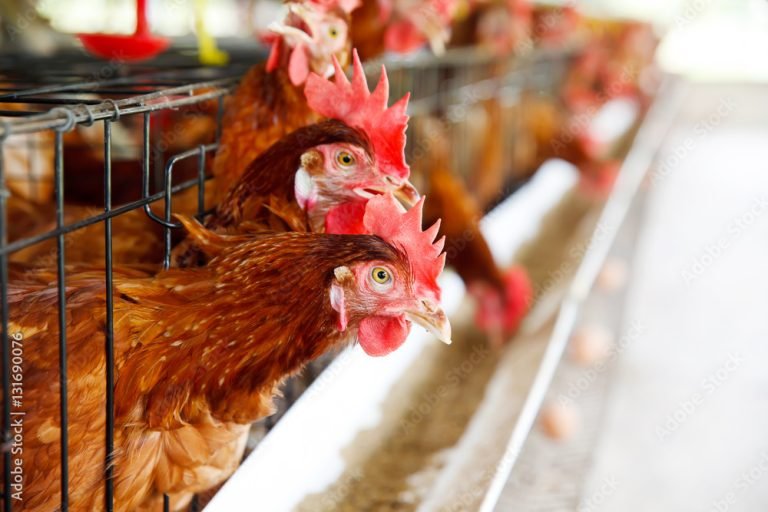
Many believe our sunny climate automatically prevents vitamin D deficiency. But if birds stay indoors in cages or batteries, they get zero natural vitamin D production.
Uchenna ran a 2,000-bird battery cage operation near Awka. He had excellent feed and biosecurity. But egg quality was poor. He never considered vitamin D because “we have sunshine.”
After consultation, he modified his house with large openable panels. Birds now get indirect sunlight exposure for two hours daily. His soft-shell problem decreased by 70%.
Mistake 2: Outdoor Access Without Shade
Some farmers push birds outside during the hottest part of the day. They think more sun means more vitamin D. This causes heat stress and deaths.
I lost 8 broilers this way in my first year of farming. The birds collapsed from heat stroke during midday sun exposure. Birds need 15 to 30 minutes of sun, not hours of roasting heat.
Always provide shade and water during outdoor time.
Mistake 3: Overdosing Vitamin D Supplements
When farmers discover vitamin D deficiency, some panic and overdose supplements. Excess vitamin D causes calcium deposits in organs, kidney failure, and death.
A farmer in Ayamelum put triple the recommended vitamin D in water. He wanted “fast results.” Twenty birds died within a week. The post-mortem showed kidney damage from vitamin D toxicity.
Follow dosage instructions precisely. More is not better with vitamins.
Mistake 4: Ignoring Feed Quality
Cheap feed saves money initially but costs more long-term. Poor quality feed lacks proper vitamin supplementation regardless of sunlight exposure.
Quality commercial feed from reputable mills includes balanced vitamin D3. This works with natural sunlight to maintain bird health. Don’t compromise on this foundation.
Mistake 5: Not Adjusting for Season
Vitamin D needs change with seasons. During harmattan, birds stay indoors more due to cold and dust. Sunlight intensity also varies.
Monitor your flock closely during seasonal transitions. Adjust outdoor time schedules and consider short-term supplementation if needed.
Monitoring Vitamin D Status in Your Flock

You don’t need expensive laboratory tests to monitor vitamin D levels. Simple observations tell you most of what you need to know.
Check Eggshell Quality Daily
Strong, smooth eggshells indicate adequate calcium absorption, which requires sufficient vitamin D. Collect eggs carefully and examine them.
Good eggshells:
- Firm and hard when tapped
- Smooth surface without rough patches
- Even thickness throughout
- No cracks or breaks under normal handling
Problem eggshells:
- Thin and easily broken
- Rough, sandy texture
- Soft or rubbery shells
- Misshaped eggs
I check 10 random eggs from each house daily. This early warning system catches problems before they become serious.
Observe Bird Movement
Healthy birds with adequate vitamin D move freely and actively. They scratch ground, explore their environment, and compete for food.
Vitamin D-deficient birds sit frequently. Young birds show leg weakness or bowing. They struggle to stand or walk.
Watch your flock during feeding time. All birds should rush to eat. Any bird sitting alone needs individual examination.
Monitor Growth Rates
Broilers should reach target weights on schedule. Weigh a sample of 20 birds weekly. Compare results to breed standards.
Slow growth often indicates nutritional problems including vitamin D deficiency. Don’t assume it’s just genetics or feed quality. Consider sunlight exposure too.
My broilers reach 2.5 kilograms in 7 weeks. This matches breed expectations because they get adequate sunshine and quality feed.
Track Production Records
For layers, record daily egg production, egg weight, and mortality rates. Sudden drops in any parameter signal investigation is needed.
I use a simple notebook system. Each house gets one page per week. Morning and evening egg counts are recorded with any unusual observations.
When production drops 5% or more without obvious cause, I review vitamin D management first. This includes sunlight access, feed quality, and supplement use.
Practical Implementation Guide for Nigerian Farms
Let me share a step-by-step approach based on what works in our local conditions. These are real ways to give chickens vitamin D in the tropics that I use daily.
For New Farms (Planning Stage)
Design your farm with vitamin D in mind from the start. This saves money and trouble later.
Site selection: Choose locations with good sun exposure. Avoid areas surrounded by tall buildings or trees that block sunlight.
House orientation: Position long sides facing north-south. This minimizes direct sun on walls during hot afternoons while allowing morning and evening sun.
Include outdoor runs: Budget for outdoor access areas in your initial plan. Retrofitting is more expensive.
Plan for shade: Include trees, shade cloths, or roof overhangs in your design drawings.
For Existing Indoor Farms
You don’t need to demolish and rebuild. Make practical modifications within your budget.
Phase 1 – Immediate actions (Free):
- Open doors and windows during cool morning hours
- Create schedule for monitored outdoor time
- Observe birds and record eggshell quality
Phase 2 – Low-cost improvements (₦50,000 to ₦150,000):
- Add wire mesh outdoor runs to existing structures
- Install removable shade nets
- Create dust bath areas outside
- Improve ventilation with additional windows
Phase 3 – Major upgrades (₦200,000+):
- Build permanent semi-intensive runs
- Install proper drainage for outdoor areas
- Add trees and permanent shade structures
- Upgrade to quality feed with verified vitamin content
For Battery Cage Operations
Battery cages present special challenges. Birds cannot access outdoor areas. You must rely on indirect sunlight and supplementation.
Windows: Install large windows that allow natural light penetration. Clean windows monthly to maximize light transmission.
Feed quality: Use only premium commercial feed from reputable mills with guaranteed vitamin D3 content.
Supplementation: Consider water-soluble vitamin D3 during problem periods. Consult a poultry nutritionist for proper dosing.
Monitoring: Check eggshell quality twice daily. Record results to catch problems early.
Long-term: Consider transitioning to semi-intensive systems if your market supports the change. Free-range and semi-intensive eggs command premium prices in Nigerian markets.
Economic Benefits of Proper Vitamin D Management
Good vitamin D nutrition improves profitability through multiple channels. I track these benefits closely on my farm.
Improved Egg Production
My layer flock averages 85% to 88% production rate. This exceeds the 75% to 80% rate I see on farms with vitamin D problems.
On a 1,000-bird farm, this difference equals 50 to 80 extra eggs daily. At ₦60 per egg, that’s ₦3,000 to ₦4,800 extra income daily or ₦90,000 to ₦144,000 monthly.
This pays for quality feed and infrastructure improvements quickly.
Reduced Egg Breakage
Thin eggshells break during collection, transport, and storage. I lose less than 2% of eggs to breakage. Farms with vitamin D problems lose 5% to 15%.
On 850 daily eggs, reducing breakage from 10% to 2% saves 68 eggs daily. That’s ₦4,080 daily or ₦122,400 monthly in saved product.
Better Feed Conversion
Broilers with adequate vitamin D grow efficiently. They convert feed to meat at better ratios.
My broilers achieve 1.8:1 feed conversion. Birds with vitamin D deficiency might reach 2.2:1 or worse. This means I use less feed per kilogram of meat produced.
On 1,000 broilers reaching 2.5 kilograms each, improved feed conversion saves 1,000 to 1,500 kilograms of feed per batch. At ₦200 per kilogram, this is ₦200,000 to ₦300,000 saved.
Lower Mortality Rates
Healthy birds with strong bones resist diseases better. My mortality rate runs 3% to 5% per cycle. Some farms lose 10% to 15% of birds.
Lower mortality means more birds sold and less money wasted on dead stock. On 1,000 birds at ₦3,500 average value, reducing mortality from 12% to 4% saves ₦280,000 per cycle.
Premium Market Prices
Free-range and semi-intensive systems allow you to market healthier birds at premium prices. My eggs sell for ₦80 to ₦100 each compared to ₦60 for battery cage eggs.
Broilers from my chicken tractors sell for ₦4,500 to ₦5,000 compared to ₦3,500 for regular frozen chicken. Customers recognize quality and pay for it.
Seasonal Considerations in Nigerian Climate
Nigeria has two main seasons affecting vitamin D management: rainy and dry seasons. Each presents unique challenges.
Rainy Season Management (April to October)
Heavy rains limit outdoor time. Birds don’t like walking in wet areas and risk getting soaked.
My rainy season strategies:
- Cover part of outdoor runs with roofing sheets or tarpaulins. Birds can still go outside without getting drenched.
- Schedule outdoor time between rains. Monitor weather and let birds out during breaks.
- Ensure good drainage. Standing water breeds mosquitoes and parasites.
- Extend outdoor time when weather permits. Overcast days still provide UV-B radiation.
- Supplement vitamin D in drinking water during extended rainy periods.
Mrs. Nkechi in Ogbunike struggled with soft shells during rainy season. She thought sunshine alone was the problem. I helped her add partial roofing to her runs. Birds now access outdoor space even during light rain. Her egg quality improved significantly.
Dry Season Management (November to March)
Harmattan brings dust, cold mornings, and afternoon heat. Birds need protection from these extremes while still accessing sunlight.
My dry season approaches:
- Close houses during coldest morning hours (5 AM to 7 AM). Open up as temperatures rise.
- Provide windbreaks against harmattan dust. Use bamboo screens or shade nets on windward sides.
- Increase afternoon shade. Dry season sun is intense and dangerous from noon to 4 PM.
- Offer extra water. Birds drink more in hot, dry weather.
- Monitor for respiratory problems from dust. Keep houses well-ventilated but protected.
During December 2023, harmattan was particularly severe. Many farmers in my area reported respiratory issues in flocks. I kept birds inside during peak dust hours but extended evening outdoor time from 4 PM to 6:30 PM. My birds stayed healthy throughout the season.
Training and Knowledge Transfer
I’ve trained over 200 farmers in ways to give chickens vitamin D in the tropics through workshops and farm visits. Here’s what I teach them.
Workshop Topics
My standard vitamin D workshop covers:
- Understanding vitamin D functions in poultry
- Recognizing deficiency symptoms early
- Designing farms for sunlight access
- Balancing sun exposure with heat management
- Choosing appropriate supplements
- Monitoring flock health indicators
- Economic benefits of proper management
Each workshop includes practical demonstrations. We visit working farms to see different systems in operation.
Common Questions from Trainees
“My birds are outside but still have soft shells. Why?”
Usually the outdoor area is too small or too shaded. Birds need actual sun exposure, not just fresh air. I check their setup and find problems like dense tree cover blocking sunlight.
“Can I use regular vitamin D from pharmacy?”
No. Human vitamin D preparations contain D2 or wrong concentrations. Use only poultry-specific vitamin D3 products. Wrong products harm birds.
“How long before I see results?”
Eggshell quality improves within 2 to 3 weeks of proper vitamin D management. Leg problems in young birds take longer, maybe 4 to 6 weeks, depending on severity.
“Is morning or evening sun better?”
Both work well. UV-B intensity is similar. Choose times that fit your schedule and avoid peak heat.
Success Stories from My Students
Obiora started with 200 layers in a small compound in Nkpor. His eggs had constant shell problems. After my training, he built a simple 400-square-meter run using bamboo poles and wire mesh. Total cost: ₦45,000.
Within one month, his egg breakage dropped from 12% to 3%. He recovered his investment quickly. Today he runs 500 birds and exports eggs to Lagos market.
Ada attended my 2021 workshop on backyard farming. She keeps 50 birds in her compound. She created morning outdoor time from 6:30 to 8:30 AM before going to her teaching job.
Her family now consumes high-quality eggs daily. She sells surplus to neighbors at premium prices. The birds fertilize her vegetable garden. It’s a perfect small-scale integration.
Table: Vitamin D Management Systems Comparison
| System Type | Setup Cost | Daily Labor | Vitamin D Source | Best For | Challenges |
|---|---|---|---|---|---|
| Full Free-Range | Low to Medium (₦100k-300k) | Low | Natural sunlight | Large land areas, organic production | Predators, disease control |
| Semi-Intensive Run | Medium (₦150k-400k) | Low to Medium | Natural sunlight | Most commercial farms | Initial construction cost |
| Chicken Tractors | Low (₦30k-80k each) | High (daily moves) | Natural sunlight | Small to medium flocks, pasture | Labor intensive |
| Deep Litter + Outdoor Time | Low (modify existing) | Medium | Natural sunlight | Existing indoor farms | Requires scheduling, supervision |
| Battery Cage + Windows | Low to Medium | Low | Indirect sunlight | Limited space, maximum production | Relies on feed supplementation |
| Fully Enclosed + Supplements | High (₦500k+) | Low | Feed supplements, possibly UV lamps | Biosecurity-critical operations | High ongoing costs, electricity |
Integration with Other Farming Practices
Vitamin D management works best as part of total farm health programs, not as an isolated practice.
Biosecurity and Sunlight Access
Some farmers think outdoor access compromises biosecurity. This isn’t necessarily true if you plan properly.
Use dedicated outdoor runs only your birds access. Don’t allow wild birds in through proper netting. Practice all-in, all-out management. Clean and disinfect runs between batches.
I maintain excellent biosecurity despite semi-intensive systems. My last disease outbreak was in 2020 – three years ago. Visitors follow foot bath protocols. Feed and equipment are dedicated to specific houses.
Nutrition Programs
Vitamin D works with calcium and phosphorus. All three must be balanced for strong bones and shells.
I use limestone (oyster shell) as a calcium source. I provide it free-choice in separate feeders. Birds self-regulate intake based on their needs. This system works because vitamin D helps them absorb that calcium.
Genetics and Breed Selection
Some breeds tolerate tropical heat better than others. When choosing birds, consider both productivity and environmental adaptation.
I raise Isa Brown layers. They’re excellent layers that handle our heat reasonably well. For broilers, I use Arbor Acres. They grow fast and tolerate outdoor systems.
Local breeds like Nigerian indigenous chickens are extremely heat-tolerant. They’re perfect for extensive free-range systems. Production is lower but they need less management and command premium prices.
Resources for Nigerian Chicken Farmers
Several Nigerian institutions provide reliable information and support for poultry farmers.
Government and Research Institutions
National Agricultural Extension and Research Liaison Services (NAERLS) – Based at Ahmadu Bello University, Zaria. They publish research on poultry nutrition and management. Website: https://naerls.gov.ng
National Animal Production Research Institute (NAPRI) – Shika, Kaduna. They conduct research on poultry health and breeding. They offer training programs for farmers.
Nigerian Agricultural Quarantine Service – Monitors disease outbreaks and provides biosecurity guidance.
Professional Organizations
Poultry Association of Nigeria (PAN) – The main industry body. They organize conferences, training, and advocacy. Regional chapters exist in most states including Anambra.
I’m a member of PAN Anambra State chapter. We meet quarterly to discuss challenges and solutions. Networking with fellow farmers has taught me tremendously.
Local Support
Contact your Local Government Agricultural Development Program (ADP) office. Most have poultry extension officers who visit farms and provide advice.
The Oyi LGA office has been helpful to me over the years. They connect farmers with government programs and input suppliers.
Safety and Welfare Considerations
While focusing on vitamin D, never forget overall bird welfare. Healthy birds are happy birds.
Avoiding Heat Stress
Heat kills faster than vitamin D deficiency. Always prioritize bird comfort during outdoor time.
Safety practices:
- Never force birds to stay outside during peak heat
- Always provide multiple water points
- Create adequate shade options
- Monitor bird behavior constantly
- Bring birds inside if heat stress appears
I lost birds to heat stress in my early years. It taught me hard lessons. Now I’m extremely cautious about afternoon temperatures above 32°C.
Predator Protection
Outdoor access means predator risk increases. Plan protection measures from day one.
Common predators in my area:
- Hawks and eagles (major threat)
- Snakes
- Mongooses
- Bush cats
- Dogs
I use overhead netting, sturdy wire mesh sides, and watchful farm hands. Despite precautions, I still lose 1 to 2 birds per year to predators. It’s part of free-range farming but should be minimized.
Stress Reduction
Chickens are creatures of routine. Sudden changes stress them and reduce production.
Introduce outdoor access gradually. Don’t suddenly force indoor birds outside for hours. Start with 15 to 30 minutes daily. Increase duration over 2 weeks as birds adapt.
My friend Chinedu rushed this process. His birds panicked and piled up in corners. Several died from suffocation. Go slowly and let birds adjust naturally.
Future of Vitamin D Management in Nigerian Poultry
The poultry industry in Nigeria is growing rapidly. The National Bureau of Statistics reports increasing consumption of eggs and chicken meat. More people are entering farming as a business.
As farms intensify and expand, vitamin D management becomes more challenging but also more critical. Large battery cage operations struggle with this issue especially.
I see a trend toward semi-intensive systems. Consumers increasingly want healthier, more naturally raised birds. They’re willing to pay premium prices for quality.
This trend favors farmers who master natural ways to give chickens vitamin D in the tropics. Those who continue with poorly managed intensive systems will struggle to compete.
Technology may help. Solar-powered UV-B lamps could become affordable. Better feed formulations with optimized vitamin levels will emerge. But natural sunlight will always be the best, cheapest source.
My advice to new farmers: Design vitamin D management into your farm from the beginning. Learn from others’ mistakes. Don’t chase maximum intensity at the expense of bird health. Sustainable farming is profitable farming.
Conclusion
Vitamin D is essential for healthy, productive chickens in Nigeria. Despite our tropical sunshine, deficiency remains common on farms where birds lack direct sun exposure.
The solutions are straightforward and affordable. Create outdoor access through free-range systems, runs, or chicken tractors. Schedule morning and evening outdoor time. Provide shade and water. Use quality commercial feed. Monitor your birds carefully.
These simple practices have transformed my farm and the farms of hundreds of people I’ve trained. You can implement them regardless of farm size or budget.
Start small if necessary. Even 30 minutes of morning sunshine makes a difference. Observe your birds’ response. Adjust based on what you see. Build on success gradually.
Eight years ago, I knew nothing about poultry farming. I made every mistake possible including neglecting vitamin D. Today, my farm thrives because I learned these lessons. You can succeed too by applying these proven ways to give chickens vitamin D in the tropics.
Visit my farm in Oyi LGA if you’re in Anambra State. I’m always happy to share knowledge with fellow farmers. We grow together when we help each other.
Frequently Asked Questions
How much sunlight do chickens need daily in tropical Nigeria?
Chickens need 15 to 30 minutes of direct sunlight exposure daily for adequate vitamin D production. This doesn’t mean they must stay in hot sun for hours. Short exposure in early morning or late evening provides sufficient UV-B radiation while avoiding heat stress.
I’ve found that 2 hours of outdoor access daily works perfectly. Birds spend some time in sun and some in shade based on their comfort. They self-regulate naturally when given options.
Can chickens get vitamin D through glass windows?
No, glass blocks the UV-B rays needed for vitamin D synthesis in chicken skin. Even clear glass filters out these essential wavelengths. Birds sitting near windows get light for visibility but don’t produce vitamin D.
You must provide actual outdoor access or use open windows without glass barriers. I learned this lesson when my window-side birds still developed vitamin D deficiency despite plenty of visible light.
What’s the cheapest way to give chickens vitamin D naturally?
The cheapest method is scheduled outdoor time for 1 to 2 hours daily during cool periods. This requires no construction if you can safely supervise birds in an open area. Use temporary fencing or bamboo barriers to contain them. This costs nothing except your time.
For permanent solutions, chicken tractors are most affordable. Build them from bamboo and wire mesh for ₦30,000 to ₦50,000 each. They last several years with maintenance and give excellent vitamin D access.
Do broilers and layers have different vitamin D requirements?
Both need vitamin D for calcium metabolism and bone health, but requirements differ slightly. Fast-growing broilers need more vitamin D to support rapid skeletal development. Layers need adequate vitamin D throughout life for strong eggshells and bone integrity.
In practical terms, provide both types with 20 to 30 minutes of daily sunlight exposure. Use quality commercial feed formulated for their specific stage. Broiler starter should contain 2,500 to 3,000 IU vitamin D per kilogram. Layer feed typically contains 2,000 to 2,500 IU per kilogram.
I raise both on my farm using similar outdoor access schedules. Both types thrive with this approach.
How do I know if my chicken feed has enough vitamin D?
Check the feed tag or label for guaranteed analysis. Reputable manufacturers list vitamin D3 content in International Units (IU) per kilogram. Look for these minimum levels:
- Chick starter: 2,500 IU/kg
- Grower feed: 2,000 IU/kg
- Layer feed: 2,000 IU/kg
- Broiler finisher: 2,000 IU/kg
If the tag doesn’t list vitamin D content, the feed quality is questionable. Switch to a reputable brand like Vital Feed, Top Feed, or CHI Limited. These companies maintain proper vitamin supplementation.
I once bought unmarked feed bags at a cheap price. No vitamin information appeared anywhere. My birds developed problems within weeks. Never compromise on feed quality to save small amounts of money.
What happens if chickens get too much vitamin D?
Vitamin D toxicity causes serious health problems including kidney damage, calcium deposits in soft tissues, and death. Symptoms include weakness, loss of appetite, excessive thirst, and weight loss.
This usually happens from overdosing supplements, not from sunlight exposure. Chickens cannot produce toxic vitamin D levels from sun exposure. Their bodies regulate production naturally.
Follow dosage instructions exactly when using vitamin D supplements. Never double or triple doses trying to fix problems faster. If you suspect toxicity, stop supplementation immediately and consult a veterinarian.
I’ve witnessed this mistake twice at farms I visited. Both farmers panicked about vitamin D deficiency and added excessive supplements. Multiple birds died before they realized the problem.
Can I use vitamin D supplements made for humans on my chickens?
No, never use human vitamin D supplements for chickens. Human products contain vitamin D2 (ergocalciferol) or wrong concentrations of D3. Chickens need vitamin D3 (cholecalciferol) at specific poultry dosages.
Human supplements also contain other ingredients like binders, flavoring, or additional vitamins that may harm chickens. Some tablets contain xylitol which is toxic to many animals.
Purchase only veterinary-approved poultry vitamin products. These are formulated specifically for chicken metabolism and safety. They cost less than human supplements anyway when you calculate proper dosing.
A farmer once brought me sick birds he’d been giving human vitamin D capsules. The birds showed toxicity symptoms. We had to flush their systems and several died. Stick to poultry products exclusively.
How does harmattan season affect chicken vitamin D needs in Nigeria?
Harmattan brings cold, dusty conditions from November to March across Nigeria. Many farmers keep birds indoors more during this period to protect them from cold morning temperatures and heavy dust.
Reduced outdoor time means less natural vitamin D production. You may need temporary supplementation during extended indoor periods. Add water-soluble vitamin D3 at 1,000 IU per liter of drinking water for 5 to 7 days weekly during peak harmattan.
However, don’t completely eliminate outdoor access. Schedule outdoor time between 10 AM and 3 PM when temperatures are warmer. Create windbreaks using tarpaulins or shade nets to protect birds from harsh harmattan winds and dust.
I use partial roofing and bamboo screens on the windward side of my runs during harmattan. Birds still access outdoor areas but have protection from the worst conditions. This maintains year-round vitamin D production with minimal supplementation needed.
During December 2024 harmattan, I supplemented vitamin D for only 2 weeks when dust was extremely heavy. The rest of the season, my birds managed well with protected outdoor access and quality feed.
About the Author:
Pius Emeka is a practical chicken farmer and trainer based in Oyi Local Government Area, Anambra State, Nigeria. With 8 years of hands-on experience raising layers and broilers, he has trained over 200 farmers across the Southeast region.
His farm operates semi-intensive and free-range systems that prioritize natural management practices while maintaining commercial viability. Pius is a member of the Poultry Association of Nigeria (PAN) Anambra chapter and regularly conducts workshops on sustainable poultry farming practices.
Disclaimer: This article provides educational information based on practical farming experience and available research. It is not a substitute for professional veterinary advice. Always consult with a licensed veterinarian for specific health concerns or before starting supplementation programs. Different farm conditions may require adapted approaches to the methods described here.